Introduction
Managing your money requires planning and discipline. Without a clear approach, income can quickly disappear in unnecessary spending. Effective budget management allows you to understand where money goes, control daily expenses, and create a system for saving. The article explains how to set a monthly budget, track expenses, distribute income, and implement simple saving strategies.
1. Understanding Your Monthly Income
The first step in budgeting is knowing how much money you earn. Your total income includes salary, side income, and any other sources. Keep a record of all income sources for one month. Understanding exact figures allows you to plan expenses more effectively.
Steps to track income:
- List all income sources.
- Record exact amounts.
- Separate fixed income from variable income.
- Calculate total monthly income.
Understanding income helps in setting realistic limits for spending and saving.
2. Categorizing Expenses
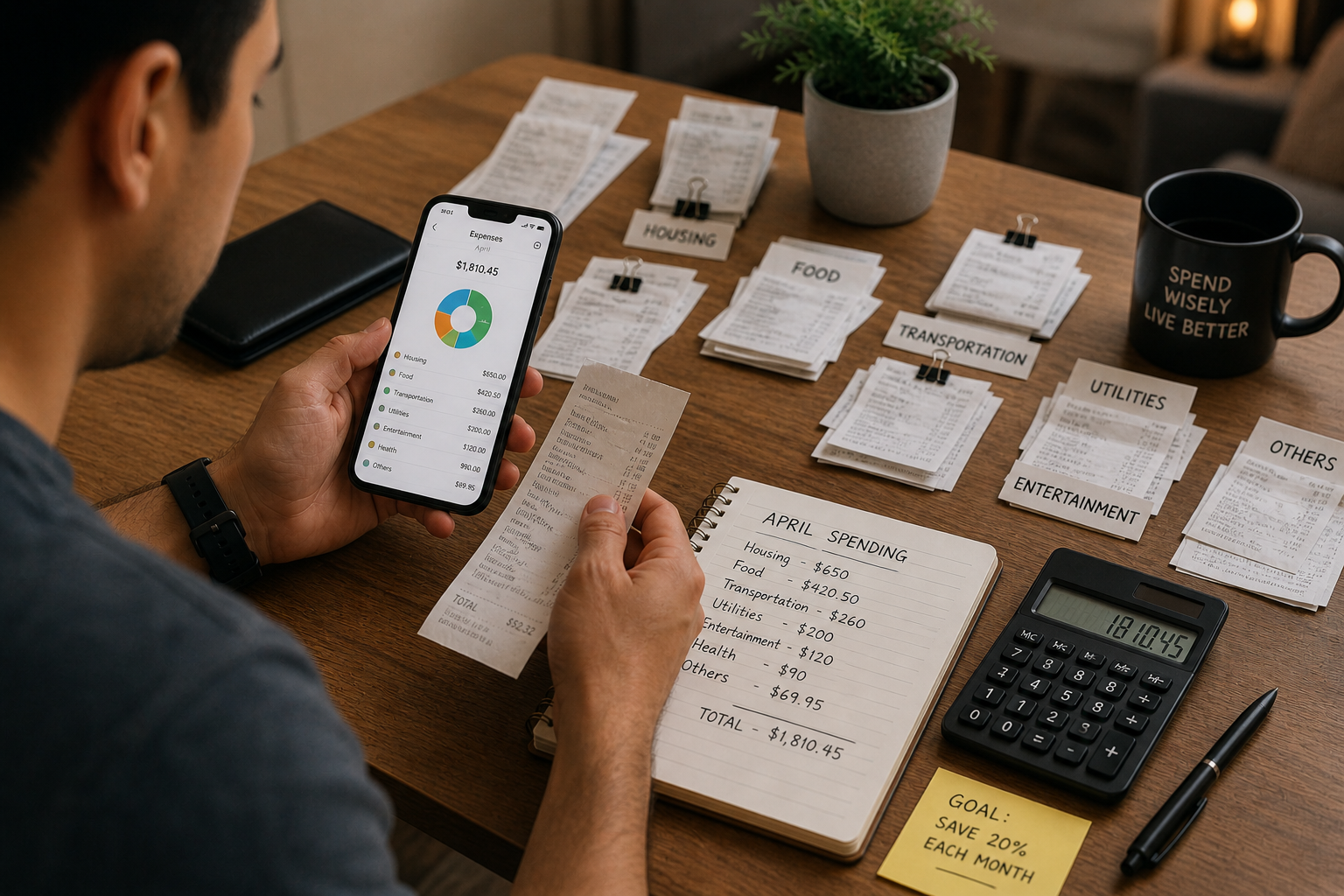
Divide expenses into categories to identify where money is spent. Common categories include:
- Housing
- Utilities
- Food
- Transportation
- Health
- Education
- Entertainment
- Miscellaneous
Tracking categories reveals patterns of spending and areas to cut costs. Categorizing also helps assign a percentage of income for each category.
3. Setting a Monthly Budget
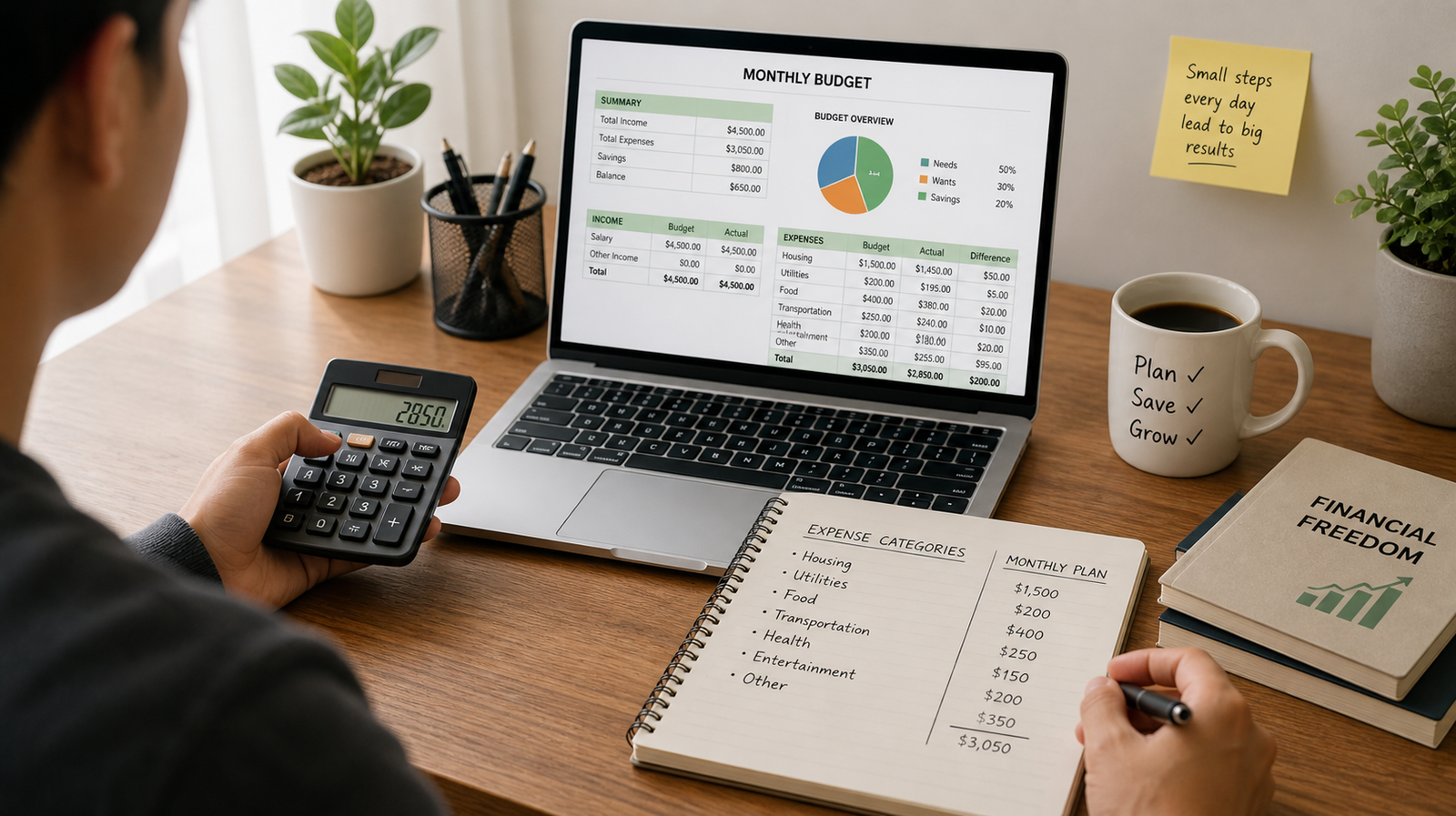
A monthly budget is a plan to allocate income for each expense category. It ensures money is available for needs and savings. A simple approach is to divide income into:
- Fixed expenses (rent, bills)
- Variable expenses (food, transportation)
- Savings (emergency fund, investments)
Steps to create a budget:
- Use the income record from step one.
- Assign amounts to each category.
- Allocate at least 10-20% for savings.
- Keep a small portion for unexpected expenses.
4. Daily Expense Control
Daily expense control prevents overspending. Small, uncontrolled spending can accumulate into large financial losses.
Methods to control daily expenses:
- Track every purchase using a notebook or app.
- Compare spending with the monthly budget.
- Avoid impulse purchases.
- Plan meals and shopping in advance.
- Use cash for small expenses to limit overspending.
Tracking daily expenses helps identify waste and encourages financial discipline.
5. Understanding Income Distribution
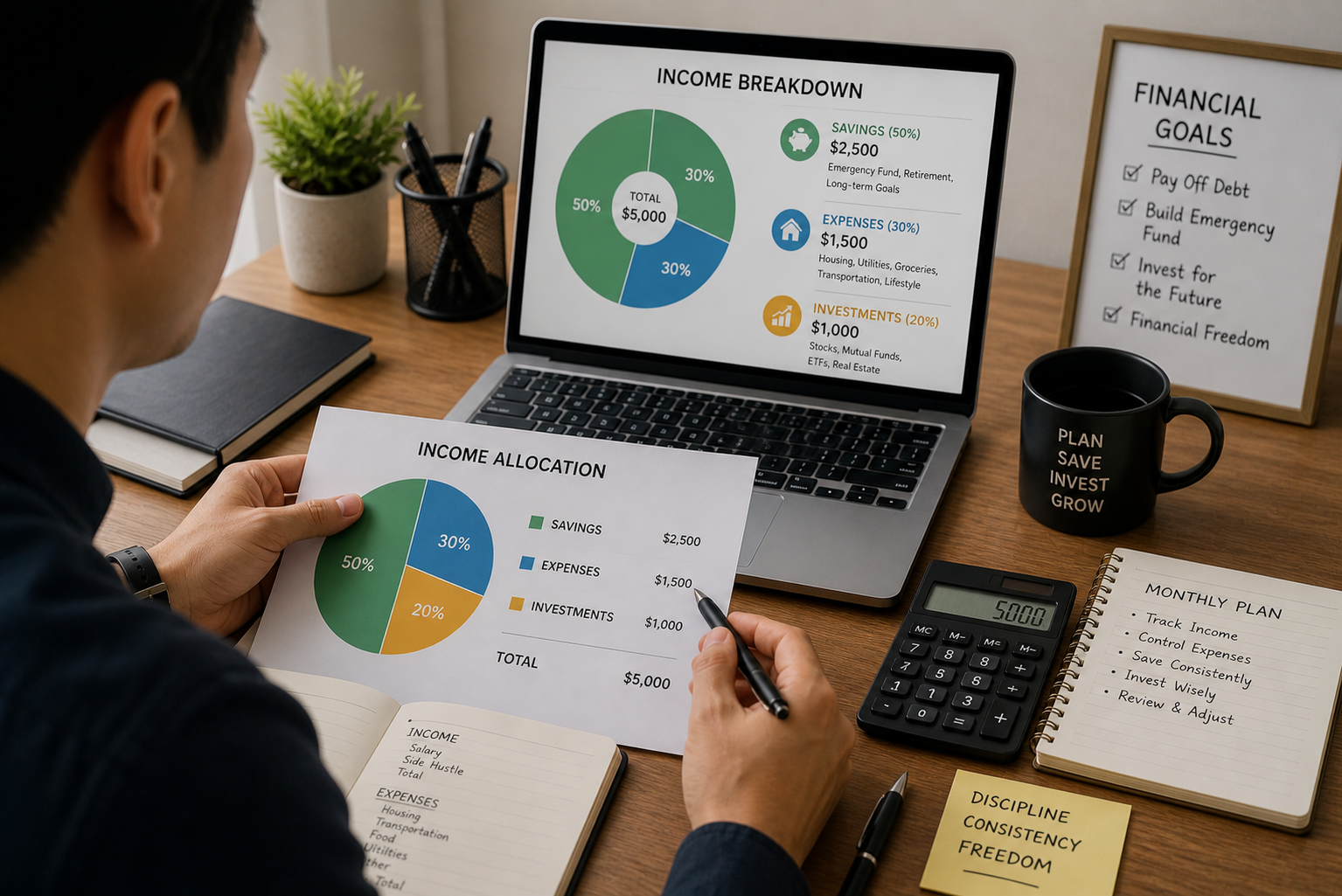
Distributing income effectively ensures financial stability. One approach is the 50-30-20 rule:
- 50% for essential expenses
- 30% for lifestyle or optional expenses
- 20% for savings and debt repayment
Distributing income prevents overspending in one category and creates a balance between needs and savings.
6. Saving Strategies
Saving is essential for long-term financial stability. Without savings, emergencies can cause debt.
Simple saving strategies:
- Pay yourself first: save a fixed percentage of income before spending.
- Use automatic transfers to a savings account.
- Separate short-term and long-term savings goals.
- Avoid using savings for daily expenses.
These strategies help create a financial buffer and prevent unnecessary borrowing.
7. Tracking Spending
Tracking spending provides insight into financial habits. Monitoring ensures adherence to the budget and identifies areas for improvement.
Practical tracking tips:
- Keep receipts for all purchases.
- Use budgeting apps or spreadsheets.
- Review spending weekly.
- Adjust budget if patterns change.
Regular tracking helps prevent financial losses and increases control over money.
8. Avoiding Unnecessary Financial Losses
Preventing waste reduces financial stress. Common sources of loss include:
- Unplanned shopping
- High-interest debt
- Late bill payments
- Subscription services not used
Tips to avoid loss:
- Review bills before paying.
- Cancel unused subscriptions.
- Avoid borrowing for non-essential items.
- Compare prices before purchases.
Reducing unnecessary losses increases available funds for savings and investment.
9. Using Technology for Finance Management
Digital tools simplify budgeting and tracking. Apps allow real-time expense monitoring and generate reports.
Examples:
- Spreadsheet trackers
- Budgeting apps
- Mobile banking alerts
Using technology reduces manual errors and ensures consistent tracking.
10. Creating a Financial Plan
A financial plan defines long-term goals and steps to achieve them. Include:
- Short-term goals (monthly savings)
- Medium-term goals (emergency fund, debt repayment)
- Long-term goals (investments, retirement fund)
A plan provides a roadmap for managing money and achieving financial stability.
Conclusion
Effective money management involves tracking income, categorizing expenses, setting a monthly budget, controlling daily spending, and implementing saving strategies. Understanding income distribution and using technology simplifies financial planning. With consistent practice, these habits improve long-term financial stability and reduce unnecessary financial losses.