Introduction
Financial stability is achieved by managing money carefully and making informed decisions. Without a clear system, income can disappear in unplanned expenses. Many people struggle because they do not have clear records of income and spending.
Adopting simple personal finance habits improves long-term financial stability. These habits include tracking income, setting a budget, monitoring daily spending, distributing income effectively, saving consistently, and avoiding financial losses. This article explains these practices in detail and provides practical steps to implement them.
1. Tracking Income
Understanding income is the first step in personal finance management. Income is not limited to salary. Other sources include side jobs, freelance work, rental income, interest, or dividends. Recording all income sources ensures clarity on available money.
Steps to track income
- List all income sources
Include salary, freelance work, commissions, rental income, or other earnings. - Record exact amounts
Use bank statements or receipts to record exact amounts. Avoid approximations. - Separate fixed and variable income
Fixed income is predictable and includes salary or rent received. Variable income changes monthly and includes bonuses or freelance projects. - Calculate total monthly income
Add all sources to determine total available funds.
Tracking income provides a foundation for budgeting and planning for savings. Without this step, it is difficult to control spending or distribute money effectively.
2. Categorizing Expenses
Categorizing expenses helps identify where money is spent and highlights areas for control. Categories provide structure and help prevent overspending.
Common categories
- Housing: rent, mortgage, maintenance
- Utilities: electricity, water, internet, phone bills
- Food: groceries, meals outside, drinks
- Transportation: fuel, public transport, vehicle maintenance
- Health: insurance, medications, doctor visits
- Education: tuition, books, courses
- Entertainment: movies, events, hobbies
- Miscellaneous: unplanned purchases, gifts
Benefits of categorizing
- Understand patterns of spending
- Identify areas for cost reduction
- Allocate money logically for each category
Tip: At the end of each month, review expenses in each category to find areas for improvement.
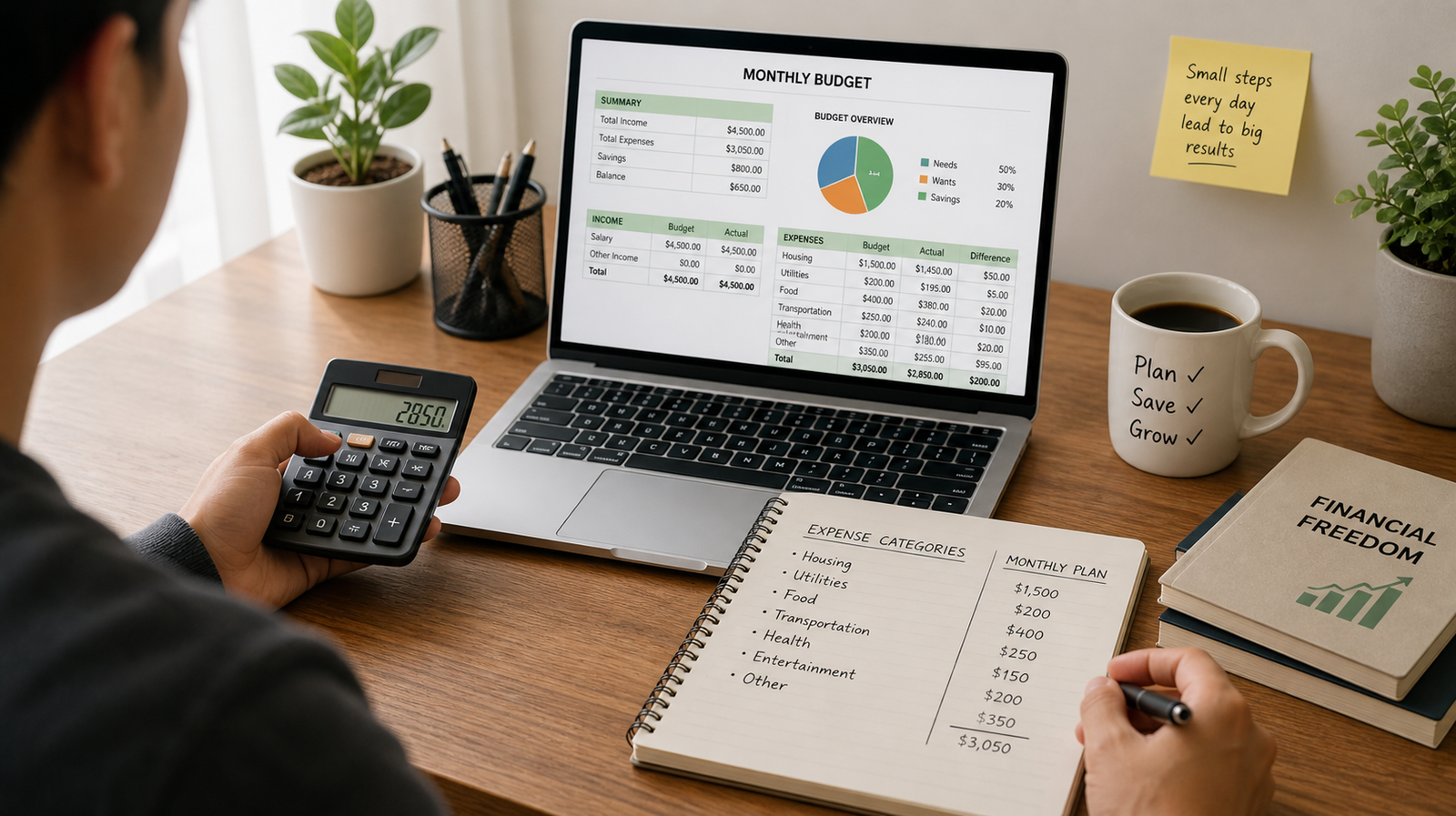
3. Setting a Budget
A budget is a plan for spending and saving. It ensures income is used effectively and prevents overspending.
Steps to create a budget
- Use recorded income as a base.
- Allocate money to fixed expenses first, such as rent and bills.
- Assign funds to variable expenses like food and transport.
- Set aside a portion for savings.
- Keep a small amount for unexpected expenses.
Types of budgets
- Zero-based budget: Every dollar is assigned to an expense or savings category.
- 50-30-20 budget: 50% for needs, 30% for wants, 20% for savings or debt repayment.
Budgeting helps control money and creates a clear plan for monthly spending.
4. Daily Expense Control
Controlling daily expenses prevents small purchases from accumulating into large losses. Consistent tracking is essential.
Practical steps
- Record all purchases daily using a notebook or app.
- Compare daily spending with the monthly budget.
- Plan shopping and meals to avoid impulsive spending.
- Use cash for small expenses to maintain control.
- Limit eating out or non-essential purchases.
Monitoring daily expenses helps detect overspending early and ensures adherence to the budget.
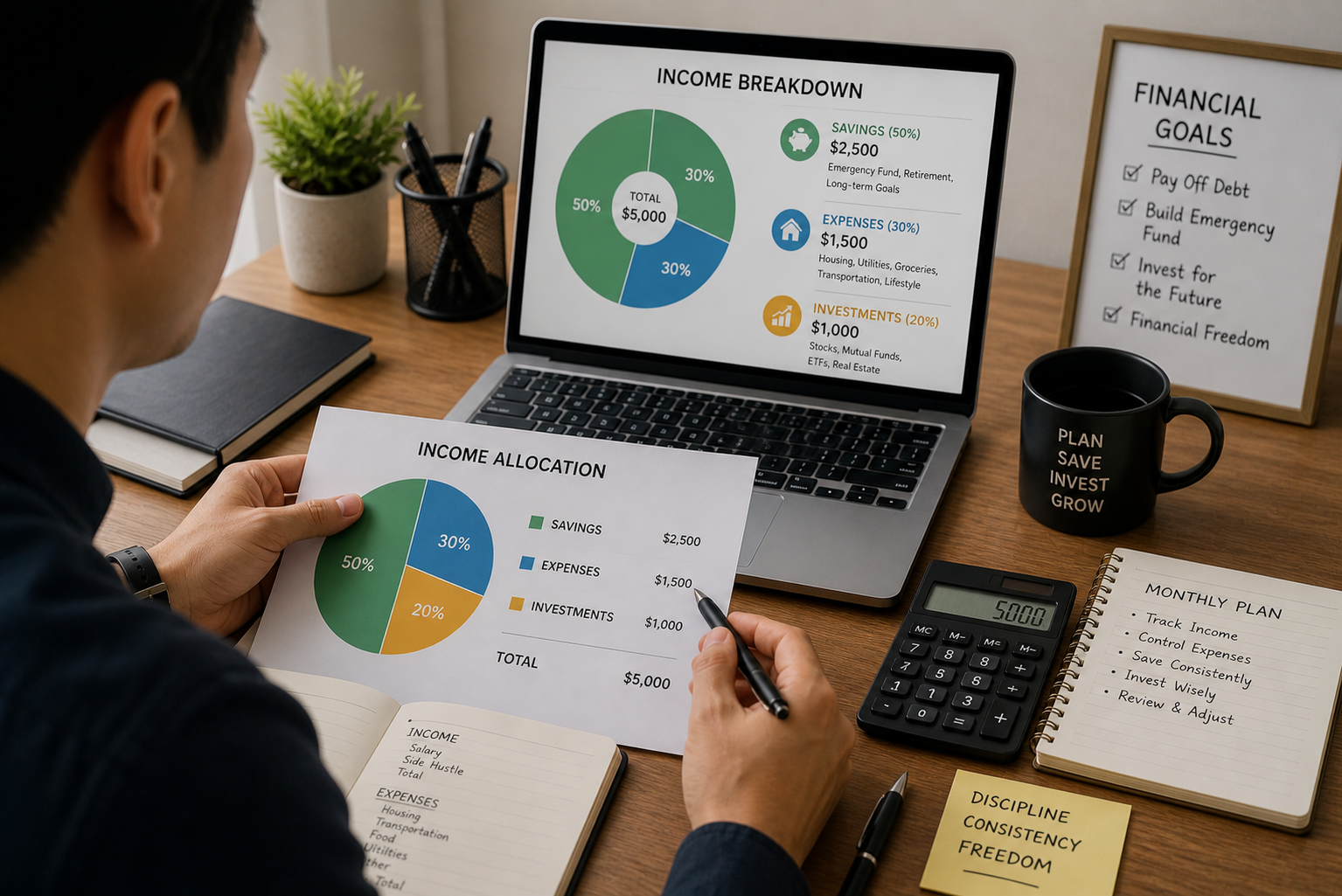
5. Understanding Income Distribution
Income distribution is the method of allocating income across different purposes. Proper distribution prevents overspending in one area and ensures money is available for needs and savings.
Distribution methods
- 50-30-20 rule: 50% for essentials, 30% for optional spending, 20% for savings or debt repayment.
- Envelope method: Assign cash to envelopes for each category to prevent overspending.
- Priority-based allocation: List all expenses and allocate funds based on priority.
Benefits
- Prevents overspending
- Ensures consistent savings
- Creates balance between needs and wants
6. Saving Strategies
Saving is critical for long-term stability. Without savings, unexpected expenses can create debt.
Effective saving strategies
- Pay yourself first
Transfer a fixed percentage to savings before spending. - Automatic transfers
Use bank automation to move money to savings account regularly. - Separate short-term and long-term savings
Short-term savings for emergencies, long-term for investments or future goals. - Avoid using savings for daily spending
Savings should only cover planned goals or emergencies. - Track progress
Review savings monthly to ensure targets are met.
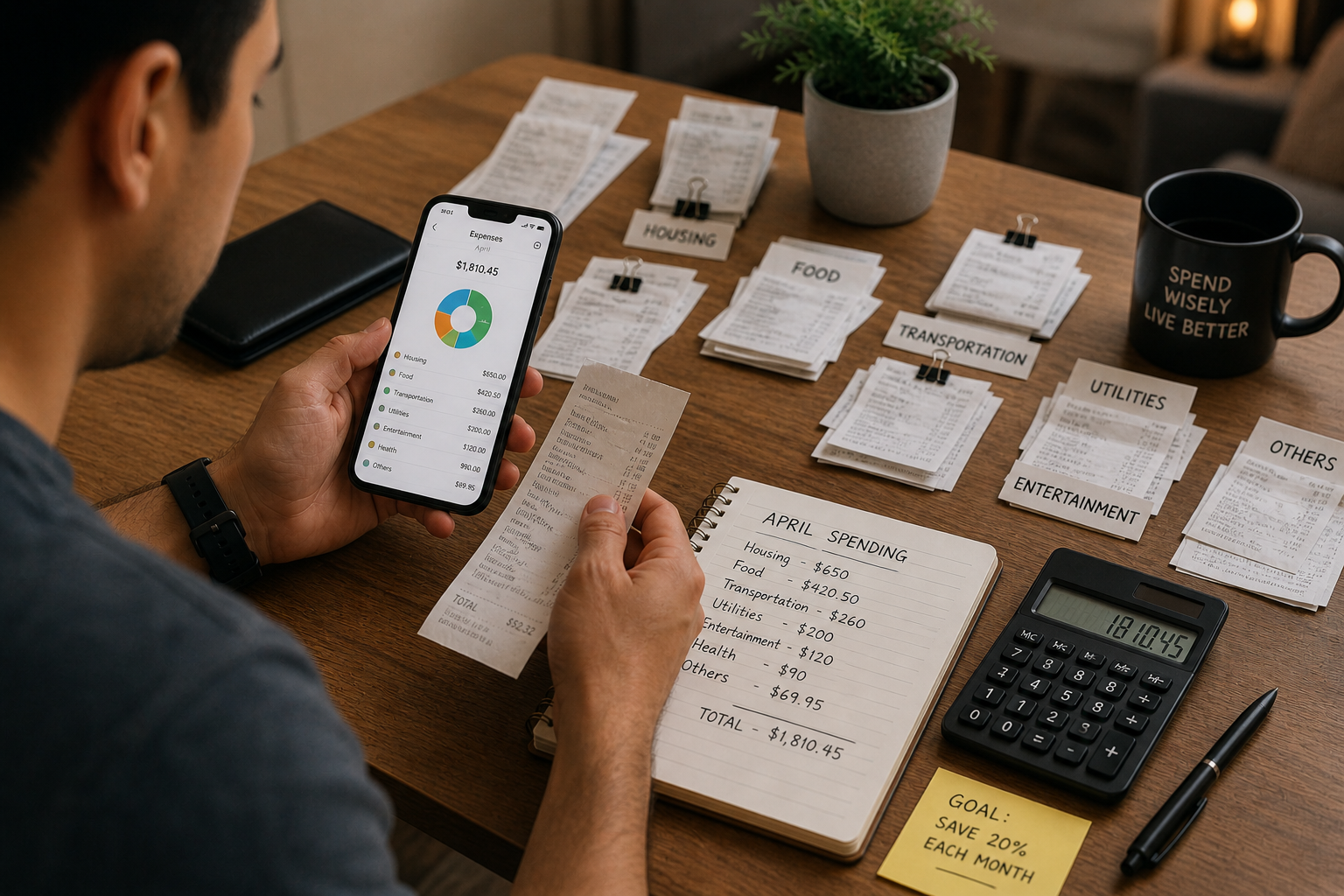
7. Tracking Spending
Tracking spending is essential for staying within budget. Monitoring allows adjustments and helps identify unnecessary expenses.
Methods
- Maintain a daily log
- Use spreadsheets to summarize monthly expenses
- Use budgeting apps for real-time tracking
- Review weekly to ensure alignment with the budget
Consistent tracking provides insight into financial habits and ensures money is used as planned.
8. Avoiding Unnecessary Financial Losses
Unnecessary losses reduce funds available for savings or investments. Common sources include:
- Impulse purchases
- High-interest debt
- Late payments
- Unused subscriptions
Tips to prevent losses
- Review bills before paying
- Cancel unused subscriptions
- Avoid borrowing for non-essential items
- Compare prices before purchases
- Delay non-urgent purchases to avoid impulse buying
Reducing losses increases available funds and improves long-term financial control.
9. Using Technology to Manage Finance
Technology simplifies tracking income and expenses. Apps provide automated alerts, expense reports, and budget summaries.
Tools
- Budgeting apps for real-time tracking
- Spreadsheets for detailed monthly analysis
- Mobile banking alerts for transactions
- Expense trackers for categories and summaries
Using technology reduces errors and ensures consistent monitoring.
10. Financial Planning for the Future
Financial planning helps define long-term goals and creates steps to achieve them.
Steps
- Set short-term goals such as monthly savings targets
- Establish medium-term goals like building an emergency fund
- Plan long-term goals including investments or retirement funds
- Adjust plan regularly to reflect changes in income or expenses
A clear plan provides a roadmap for financial stability and ensures resources are allocated effectively.
11. Income Growth and Investment
Long-term financial stability is linked to increasing income and investing wisely.
Strategies
- Consider additional sources of income like freelancing or part-time work
- Invest savings in safe options such as bonds, mutual funds, or low-risk portfolios
- Review investments periodically for growth or adjustment
- Use investment returns to support long-term financial goals
Increasing income and investing systematically ensures financial resources grow over time.
12. Financial Habits to Maintain Stability
Maintaining stability requires consistent habits over time.
Key habits
- Track income and expenses consistently
- Follow the budget without deviations
- Allocate money for savings first
- Monitor spending weekly
- Avoid unnecessary debt
- Review financial goals monthly
Consistent habits create discipline, which is crucial for long-term financial control.
Conclusion
Simple personal finance habits, combined with effective income distribution and saving strategies, create a framework for long-term financial stability. Tracking spending, avoiding unnecessary losses, and using technology to monitor finances ensures better control over money. By following these steps consistently, anyone can manage income, maintain a budget, save for the future, and achieve financial stability over time.